Winning the Shelf: Attention Testing for Packaging & Planograms
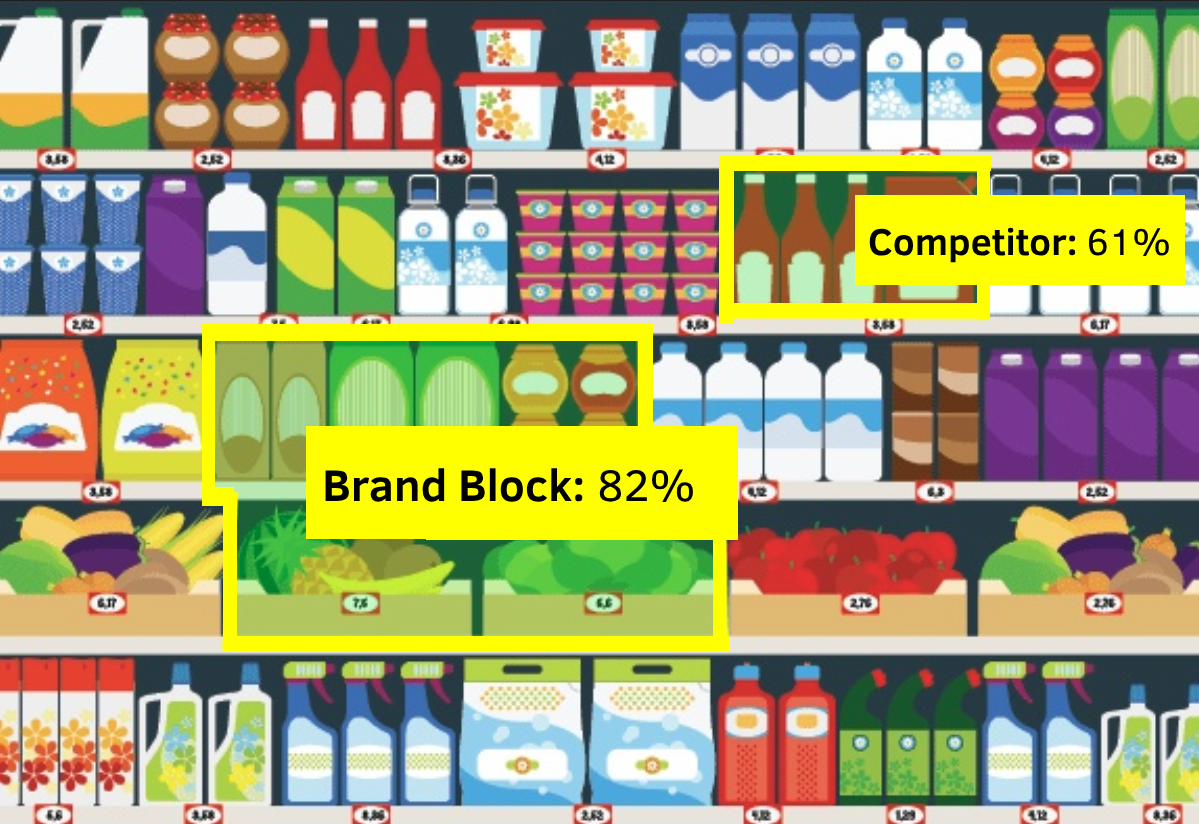
On a designer's screen, every pack looks striking. On a shelf, it fights forty competitors for a two-second glance from two metres away. Attention testing closes that gap by scoring your pack where it actually lives — in the planogram.
The shelf is a competitive attention environment
Shoppers scan a shelf, they don't read it. The pack that wins is the one whose brand block and key claim survive the blur of distance, glare, and neighbouring designs. A saliency map at shelf scale shows whether yours does.
What to check on every pack
- Brand block: is your identity the first thing seen, or lost among rivals?
- Primary claim: does the one message that sells actually get noticed?
- Legal and variant cues: are must-see elements visible, or buried?
- Range consistency: does the family read as a block, or fragment on shelf?
Test in a real planogram, not in isolation
Place your pack into a 3D supermarket aisle or a scene composed from a real planogram, then measure attention share against the packs beside it. That's the number that predicts whether a shopper's eye lands on you first. It's the same idea as pre-testing ad creative, applied to the shelf.
De-risk the print run
Packaging changes are slow and expensive to reverse. Testing attention before the artwork is signed off means you commit the print run to the design that actually gets seen. Explore the full approach for packaging and CPG.
See it on your own creative
Share a work email and we'll set you up with a short demo, resources, and free tokens to get started.